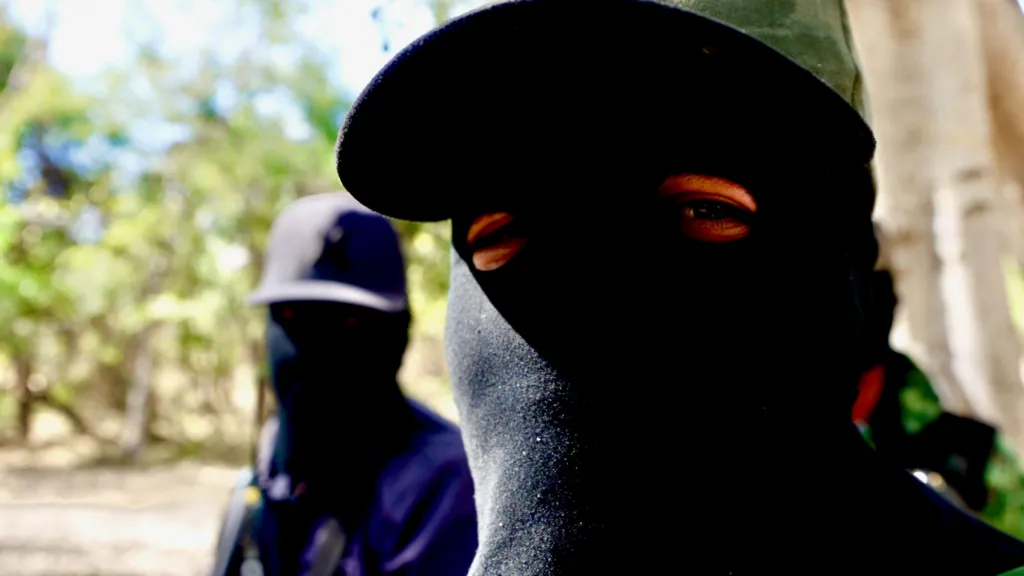
Mexico’s president praised the special forces for bringing down the country’s most wanted man. The target was the drug lord Nemesio Oseguera,Cervantes, also known as El Mencho.
Oseguera died on Sunday shortly after being captured. The operation occurred amid a violent attack in Jalisco.
However, as BBC correspondent Quentin Sommerville reported from another drug hotspot in Culiacán, the death of a major cartel leader can create a power vacuum.
Warring factions may compete violently to control territory. Analysts warn that this could trigger a surge in crime and instability.
Warning: This composition contains graphic accounts of combined violence, which some may find disturbing.
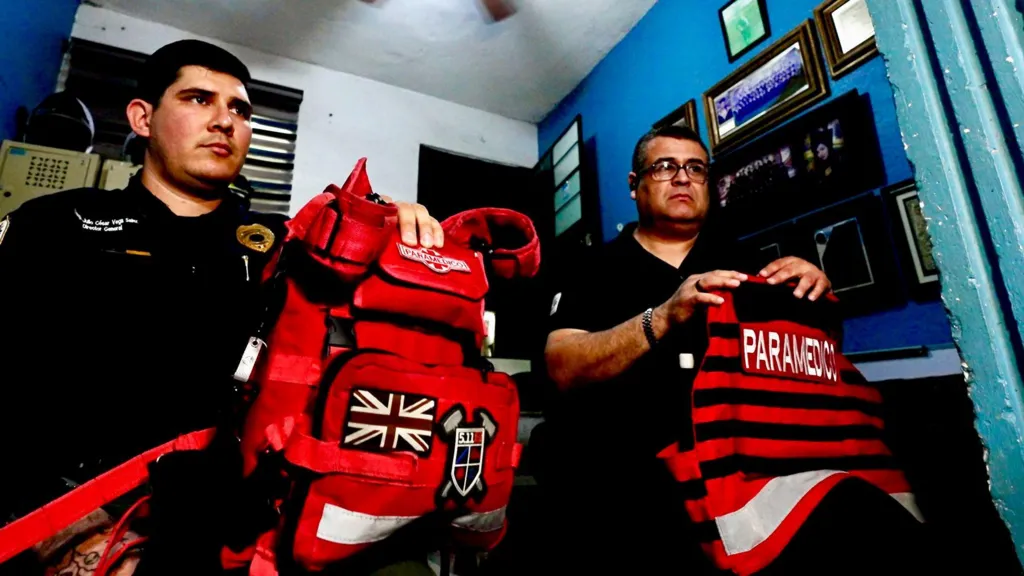
” The fear is far and wide and the fear is constant,” said paramedic Héctor Torres, 53, from the frontal seat of the ambulance in Culiacán.
We had just come from the scene of a firing inside a garage in the megacity centre.
The proprietor was lying dead in his office, blood spreading across the white tiled bottom. As Héctor and the other paramedic, Julio César Vega, 28, entered the demesne, a woman ran in wailing.
She was the man’s woman, but there was nothing to be done. Héctor checked for vitals and also placed a paper mask over the cadaver.
For the last time and a half, the Sinaloa combination, one of the world’s largest and most stressed medicine gangs has been at war with itself, after the son of one of its leaders betrayed another.
The junking of that combination leader, Ismael” El Mayo” Zambada, who’s now in captivity in the US, has wrought mayhem across Sinaloa and provides a warning of the troubles facing the country.
Violence in Culiacán and the Rise of the Sinaloa Cartel
Héctor said violence in Culiacán had never been this bad or lasted so long. Last year, call-outs increased by over 70.
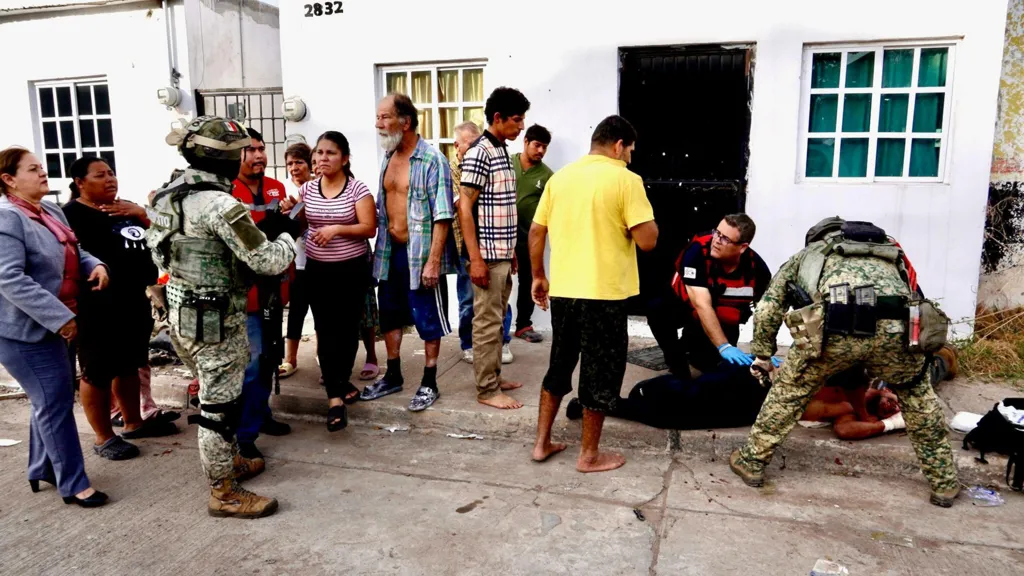
During the week I spent with Héctor and Julio, nearly every incident ended the same way. They found dead bodies in buildings or on roads. Grief-stricken family members often came seeking answers.
Many cartel victims survive. No place is safe. Schools, hospitals, and even cemeteries have been attacked.
Héctor explained, “The Sinaloa cartel was like a family. Everyone was united. They ate at the same table. They were like musketeers. Parents, uncles, and siblings suddenly fought in a deadly feud.”
The cartel turned this “family business” into a billion-dollar enterprise. It produces the deadly drug fentanyl and floods US streets with opioids. These drugs have claimed thousands of lives.
US President Donald Trump declared the Sinaloa Cartel and others as terrorist organizations. He called fentanyl a weapon of mass destruction. Trump threatened Mexico with direct military action if it does not control the drug trade and the traffickers.
Both Héctor and Julio wore body armour, carrying 14 kg of Kevlar and armour plates.
Julio said it was essential. “ We do n’t know if the bushwhackers are still at the scene or if they completed their charge and dissolved. We risk getting caught in the crossfire and getting injured. ”
The sun began to set as we drove back to the paramedic base. The megacity, which generally came alive at night, was soon vacated. Business braked.
The Mexican government stationed thousands of dogfaces to Sinaloa. They set up checkpoints on utmost roads.
When the garage proprietor was killed, bushwhackers also kidnapped three men from the property. The heavily fortified dogfaces and marines checked motorcars for any sign of the victims.
Warning The following paragraphs contain descriptions of violence and torture which compendiums may find disturbing.
hijacking in Culiacán can be a fate worse than death.
before in the week, a body had been set up ditched on the pavement outside one of the main shopping promenades.
From the state of the victim’s cadaver, it was clear he would been tortured. His body was complete, but the cranium had been barked and the eyes removed.
A sign was left with the cadaver, in large handwriting, a communication from one combination body to another. It indicted the dead man of being a snake and came with a warning” We’re coming for the rest of you.”
Culiacán is a prosperous megacity, full of shopping promenades, neat premises and fancy auto dealerships. Outside the boardwalk, a man in black cycling gear stopped in the rush- hour business to gawk as the police placed the remains of the man into a body bag.
The coming day, the body of another victim- crippled in the same way- was left by the main road heading north outside of the megacity. When the forensic platoon lifted the coexisting sign, it was delicate to read, blood ran down its face and puddled in the clay verge.
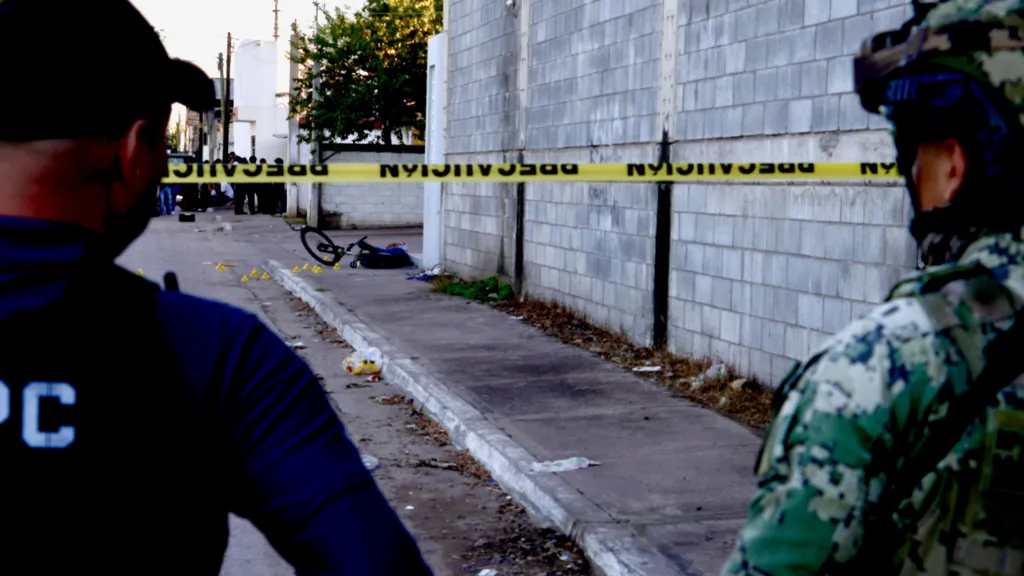
At each new crime scene, I would meet Ernesto Martínez, who has been reporting on the violence then for 27 times. A 16- time-old boy had been shot dead in the megacity’s San Rafael neighbourhood; Emmanuel Alexander legs were still tangled in his bike frame as the police marked out the further than a dozen pellet coverings around his body.
He had been killed at close range by a Handgun
Sinaloa Violence and the Search for the Missing
Martínez explained, “There used to be more police officers. There were more soldiers. There was more security.”
“You could find a checkpoint on every corner,” he said. “Yet homicides continued. They did not drop. They remained at five or six homicides a day. The same trend continues.”
I asked one of the Sinaloa cartel members what might end the violence. Before the meeting, I was told not to bring my phone or any recording device.
The cartel members showed little remorse. They said the government should step aside and let them kill each other. Their goal, they said, is to leave only one survivor.
When I asked “Marco” (not his real name) if he felt guilt, he said, “Yes. Many innocent people die. Children die. A lot of innocent people die.”
Sitting beside him, Miguel was more ruthless. “Many people will keep dying. The cartel is still fighting, and it is getting worse. The war will continue. Nothing will stop until only one remains.”
Cartel violence is increasing not just the number of deaths but also the number of missing people.
Reynalda Pulido’s son, Javier Ernesto, disappeared in December 2020. She continues searching for him and others. She leads a group called Fighting Back.
On a chilly morning at a petrol station near Culiacán, Pulido and a group of mothers hugged each other before setting out on a hunt.
The women, more than a dozen, wore white T-shirts showing the faces and names of their missing loved ones.
They began by attaching photos of some of the missing to lamp posts. The sound of their tape flapping mixed with the noise of neighborhood dogs barking aggressively. A military escort followed. Half a dozen heavily armed soldiers rode in an armored truck and a pickup with a top-mounted gun.
In a field, vultures circled above. The women used metal detectors, pickaxes, and shovels to search for remains. They examined disturbed soil and indentations in the ground. They looked for new graves. As they dug, they smelled the dirt for the distinct odor of human remains.