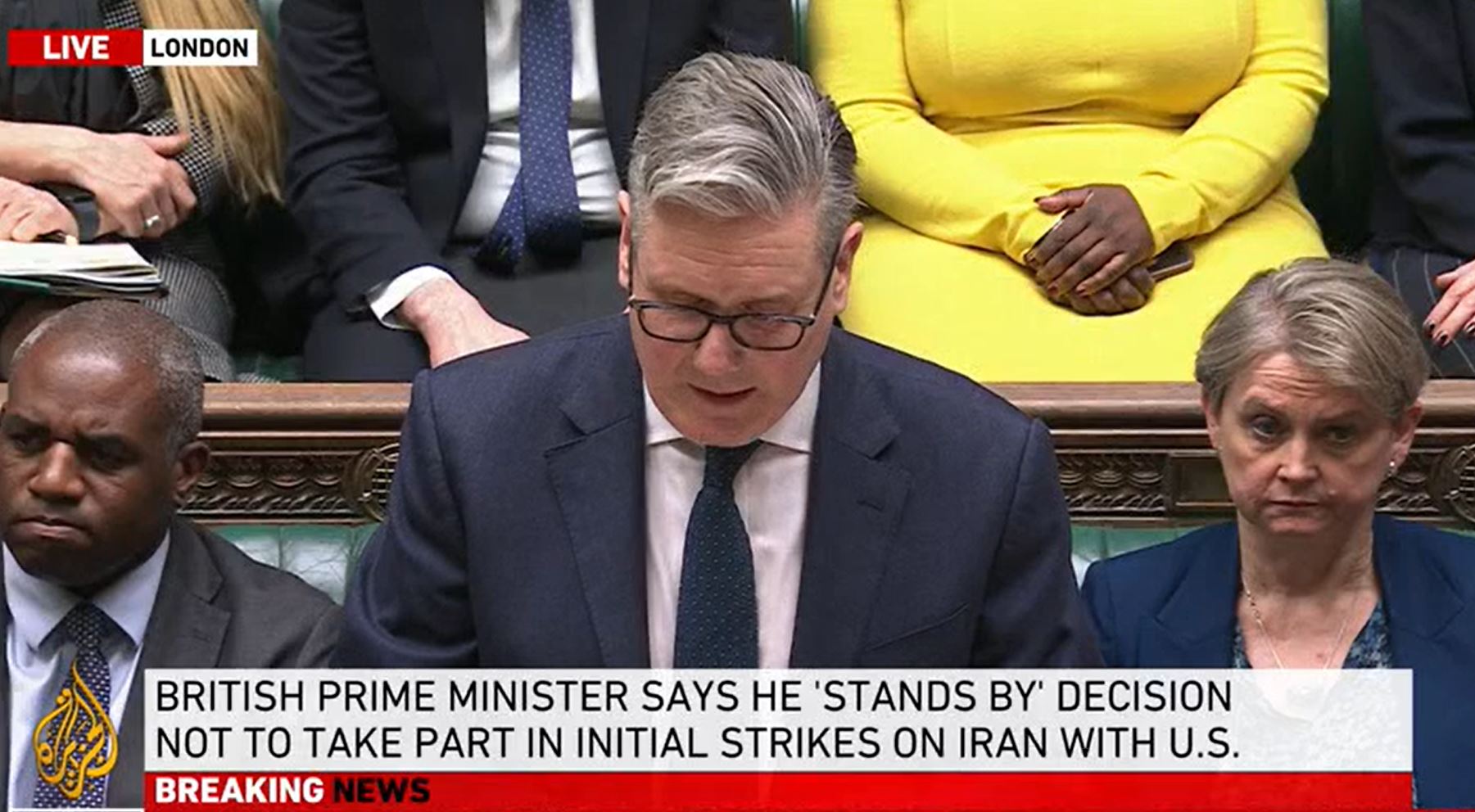
- Iran has intensified strikes on Israel and US assets across the Gulf, as casualties rise amid escalating Israeli and US attacks on Iranian targets.
- In Iran, joint US-Israeli operations have killed at least 555 people. Security chief Ali Larijani denied US media reports claiming he sought to restart nuclear talks with Washington.
- In Kuwait, the Defence Ministry said several US warplanes crashed after Kuwaiti air defenses mistakenly shot them down. All crew members survived.
- In Lebanon, Israeli airstrikes killed at least 31 people after Hezbollah launched rockets toward northern Israel. Lebanon’s prime minister has now banned Hezbollah’s military activities.
- In the Gulf of Oman, attackers targeted an oil tanker, killing one person. Drones also struck energy facilities in Qatar and Saudi Arabia.
- US President Donald Trump vowed to continue attacks on Iran until achieving all objectives. He also pledged to avenge the deaths of three US soldiers.
The Israeli army said it is intercepting a new wave of Iranian missiles.
The military reported that Iran recently launched missiles toward Israel. Air defense systems are actively working to destroy them.
The army said the Home Front Command sent advance alerts directly to mobile phones in affected areas.
Officials urged the public to follow safety instructions and act responsibly.
Iran claimed it struck the Israeli army’s communications complex in Beersheba (Bir as-Sab).
The Islamic Revolutionary Guard Corps (IRGC) said the 11th wave of missiles and drones targeted the city, according to Tasnim news agency.
The report stated that the Israeli army’s communications industries complex was hit.
Tasnim later published a photo of a building in Bir as-Sab’ that it claimed was targeted. The agency said the site houses major international companies, including Microsoft.
Iran is focusing on hitting US interests through its Gulf attacks.
Speaking to Al Jazeera, Hassan Ahmadian of the University of Tehran said targeting Gulf neighbours is “not a rational choice”.
He said Iran’s official stance shows it is aiming at US forces, bases and broader American interests in the region. These interests, he noted, include global oil and gas markets.
Ahmadian added that Iran wants to hurt the United States in ways that also impact the wider region.
He said Tehran is targeting Gulf energy infrastructure to raise global oil and energy prices and pressure Washington to reconsider its military actions.
An Iranian commander has threatened to strike Cyprus to push US aircraft out of the area.
Brigadier General Ibrahim Jabari of the Islamic Revolutionary Guard Corps (IRGC) told the Tasnim News Agency that Iran plans to launch missiles at Cyprus.
He said the United States has moved most of its aircraft there. He warned that Iran would fire several missiles to force them to leave.
French President Emmanuel Macron announced that France will increase its nuclear warheads for the first time in decades.
Speaking Monday at the L’Ile Longue military base, home to France’s ballistic missile submarines, Macron said he would raise the number of warheads from the current total of fewer than 300. He did not specify the exact increase.
This marks France’s first nuclear stockpile growth since at least 1992. Macron said the move aims to clarify the role of France’s nuclear deterrent amid rising global threats and uncertainty over US security guarantees to Europe.
He added that France will allow temporary deployment of nuclear-armed aircraft to allies and that France, Germany, and the United Kingdom will collaborate on “very long-range missile projects” to strengthen strike capabilities.