The US and Israel have entered the 12th day of their war on Iran. Tehran says the attacks hit nearly 10,000 civilian sites and killed over 1,300 people.
On Tuesday night, Israel and the US bombed Iranian targets, including Mehrabad Airport in Tehran. Iran retaliated with strikes on US and Israeli assets in the Gulf, driving global energy prices higher.
Related Topics
- PM Shehbaz felicitates Iran’s new Supreme Leader Mojtaba Khamenei
- Oil Prices Surge Above $100 as US-Israel Conflict with Iran
- Iran war could prolong disruption to energy markets, driving up oil prices.
Lawmakers in Washington are increasing political pressure. They are demanding public hearings on the war’s goals and questioning the administration’s strategy. Their concerns come as US casualties rise and investigators examine civilian strik
In Iran:
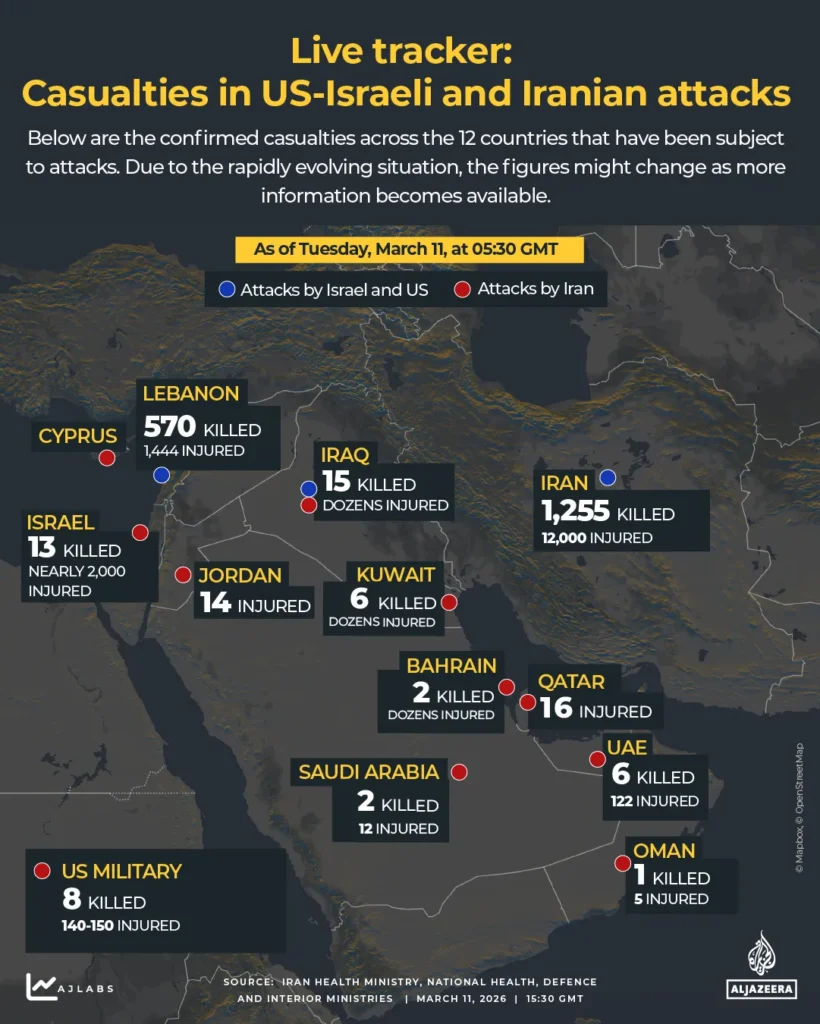
Civilian toll in Iran: Tehran reports that US and Israeli forces have bombed nearly 10,000 civilian sites, killing over 1,300 people since February 28.
Deliberate attacks: Amir Saeid Iravani, Iran’s UN ambassador, accused the US and Israel of targeting homes and healthcare facilities intentionally.
Air and naval strikes: Israeli air attacks caused powerful explosions overnight in central Tehran. The Red Crescent said a residential building was hit, and rescue teams searched rubble for survivors.
Iranian retaliation: The IRGC launched its 37th wave of attacks, firing super-heavy Khoramshahr missiles for over three hours. They struck Israeli cities including Tel Aviv, Haifa, and West Jerusalem, as well as US bases in Erbil, Iraq, Manama, and Bahrain.
Ongoing US air attacks: US Defense Secretary Pete Hegseth said Tuesday could see the heaviest wave of strikes so far. US forces hit at least eight districts in Tehran, producing huge explosions. Other cities across Iran were also attacked. Iran’s armed forces spokesperson, Abolfazl Shekarchi, said the country would retaliate against US‑Israeli strikes on residential areas.
Police chief warns protesters: Police chief Ahmad‑Reza Radan declared that anyone supporting the country’s enemies would be treated as an enemy, not a protester.
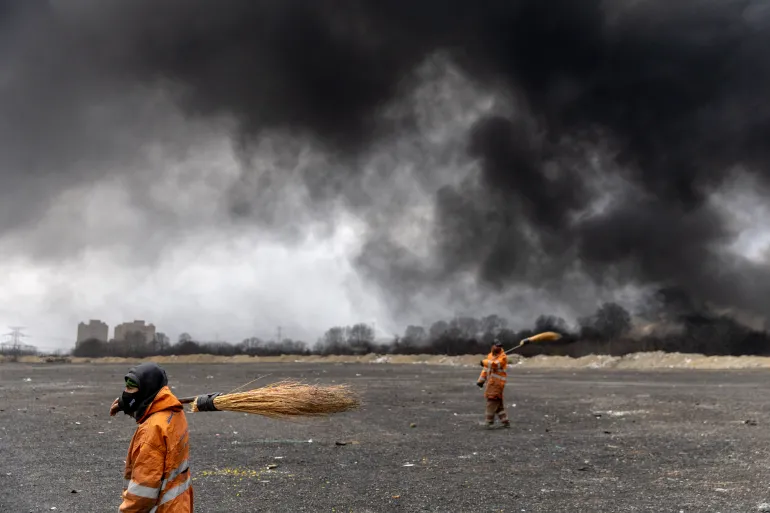
Toxic “black rain”: The World Health Organization warned that strikes on Iranian fuel depots could create polluted rainfall, known as “black rain,” posing health risks. Smoke from fires at oil facilities, including in Tehran, has mixed with rain clouds, spreading toxic contaminants.
In Gulf Nations:
Saudi Arabia: Saudi defence forces intercepted waves of Iranian drones and ballistic missiles. Some targeted the eastern region and Prince Sultan Air Base.
Qatar: Qatar’s military intercepted a new missile attack on Wednesday morning. Later, they confirmed the threat was neutralized. Officials said the situation has returned to normal.
United Arab Emirates: The UAE intercepted 26 drones on Tuesday. Nine drones fell inside its territory. A separate drone strike caused a fire at Abu Dhabi’s Ruwais Industrial Complex, home to the country’s largest oil refinery.
US defence coordination: US Secretary of State Marco Rubio spoke with Saudi Arabia’s Foreign Minister Prince Faisal bin Farhan Al Saud. They discussed reinforcing the kingdom’s defences against Iranian attacks.
Diplomatic condemnations: Qatar’s Minister of State for Foreign Affairs Mohammed bin Abdulaziz al-Khulaifi called for de-escalation across the Middle East. He urged Iran and the US to return to the negotiating table. He said Iran’s attacks on its neighbours bring no benefit to anyone.
Major refinery shut: The Ruwais oil facility halted operations on Tuesday as a precaution after a drone attack.
Iran targets US base in Kuwait: Iran’s Revolutionary Guards launched at least two missiles at a US base in Kuwait. Kuwaiti authorities have not yet commented.
Cargo ship attacked: An unknown projectile hit a cargo ship, causing it to catch fire in the Strait of Hormuz.The crew evacuated and requested assistance.
In US:
Congressional pressure: US Senate Democrats are pushing for public hearings after classified briefings from the administration failed to explain the war’s objectives or timeline.
US troop casualties: The Pentagon says about 140 American service members have been injured and seven have died since the start of Operation Epic Fury.
White House response to school strike: Press Secretary Karoline Leavitt said the US has struck more than 5,000 targets in Iran, mainly aimed at missile and nuclear facilities.
Investigation into school attack: She also confirmed that the military is investigating a strike on an Iranian girls’ school that reportedly killed around 175 students. Officials say they will accept the findings as new images suggest a US missile may have caused the blast.
Naval action in the Strait of Hormuz: US Central Command announced that its forces destroyed 16 inactive Iranian mine-laying boats near the Strait of Hormuz.
Evacuations: US authorities have evacuated over 43,000 American citizens from the Middle East using commercial and government-chartered flights.
In Isreal:
Iran’s retaliatory attacks: Iranian forces fired missiles toward Israel, but Israeli defence systems intercepted them. The launches triggered air-raid sirens across Tel Aviv and several central areas.
US warning to Israel: US officials told Israel they were unhappy with recent strikes on Iranian oil facilities. According to Axios, Washington asked Israel to halt such attacks unless the US approves them. Al Jazeera has not independently confirmed the report.
Hacked security cameras: Israel’s cybersecurity authority says Iranian hackers have breached dozens of private security cameras since the war began. Officials urged citizens to update their passwords and install the latest software updates.
Diplomatic coordination: US Special Envoy Steve Witkoff said he plans to visit Israel next week to coordinate the ongoing military operations.
In Lebanon, Iraq
Israeli strikes in Lebanon: Israeli jets bombed a residential building in central Beirut. The attack sparked a fire and heavily damaged several floors. Lebanese authorities say Israeli attacks have killed at least 570 people since last Monday.
Air strike in Baalbek district: On Wednesday, Israeli warplanes hit a building in Tamnin al-Tahta in eastern Lebanon. Lebanon’s National News Agency reported that the strike killed 10 people and injured five others.
Iranian diplomats killed: Iran accused Israel of carrying out a deadly strike in Beirut that killed four Iranian diplomats. Tehran condemned the incident as a terrorist act and demanded action from the UN Security Council.
Large displacement in Lebanon: Fighting with Israel has forced more than 667,000 people to flee their homes, according to the United Nations.
Strikes inside Iraq: Iraq’s prime minister warned US Secretary of State Marco Rubio that Iraq must not become a base for attacks. The warning came after strikes hit several areas on Tuesday, including a group linked to the Popular Mobilisation Forces. Iran has also targeted Iraq’s Kurdistan region, where US forces maintain bases.
Must read