In the early hours of February 28, 2026, Israel and the United States launched coordinated strikes on Iranian cities, including Tehran, Isfahan, and Qom. They targeted military infrastructure in a “pre-emptive” operation called Roaring Lion by Israel and Operation Epic Fury by the US.
In the early hours of February 28, 2026, Israel and the United States launched coordinated strikes on Iranian cities, including Tehran, Isfahan, and Qom. They targeted military infrastructure in a “pre-emptive” operation called Roaring Lion by Israel and Operation Epic Fury by the US.
Iran immediately retaliated. The Islamic Revolutionary Guard Corps (IRGC) fired dozens of ballistic missiles and drones toward Israel. Some projectiles also targeted US bases in the region. Explosions rocked northern Israel, and air raid sirens blared as the Iron Dome intercepted many incoming threats.
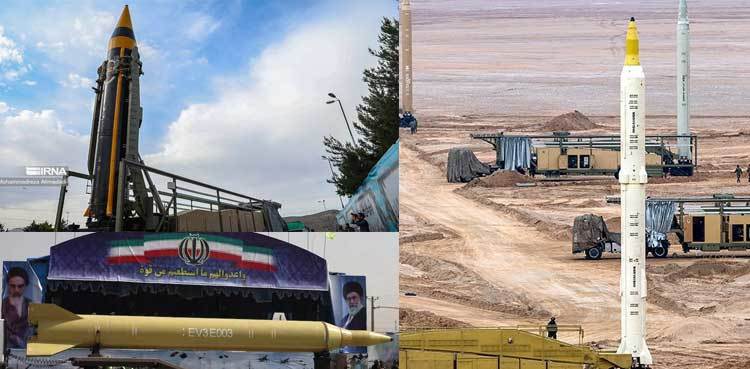
This escalation highlights Iran’s large ballistic missile arsenal. Despite past conflicts, it remains the largest in the Middle East. Iran maintains a self-imposed range limit of 2,000 kilometers (1,240 miles), enough to hit Israel and US regional assets. However, its stockpile has dropped from around 2,500 missiles to 1,000–1,200 units after previous strikes. Only about 100 mobile launchers remain operational.
Iran’s Missile Program Overview
Iran relies on ballistic missiles as a core defense strategy. The arsenal includes short-range, medium-range, and hypersonic missiles. Many are stored in underground “missile cities” for protection.
During the February 2026 retaliation, Iran deployed advanced missiles like the Sejjil and Fattah. These missiles aim to overwhelm enemy defenses. Production of solid-fuel missiles has slowed due to prior strikes, but Iran continues to maintain and expand its missile capabilities.