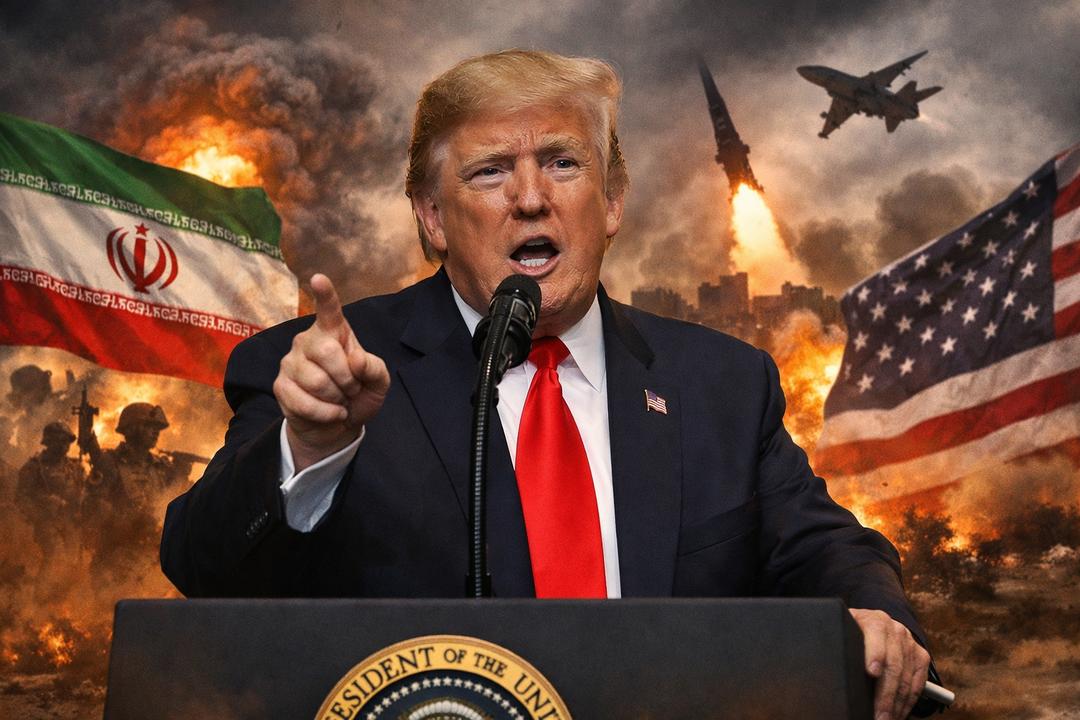
Trump Avoids Clear Iran Strategy in State of the Union
In a world on edge, many waited to see what US President Donald Trump would do next in the Middle East. However, he gave no clear signal during his longest-ever State of the Union address.
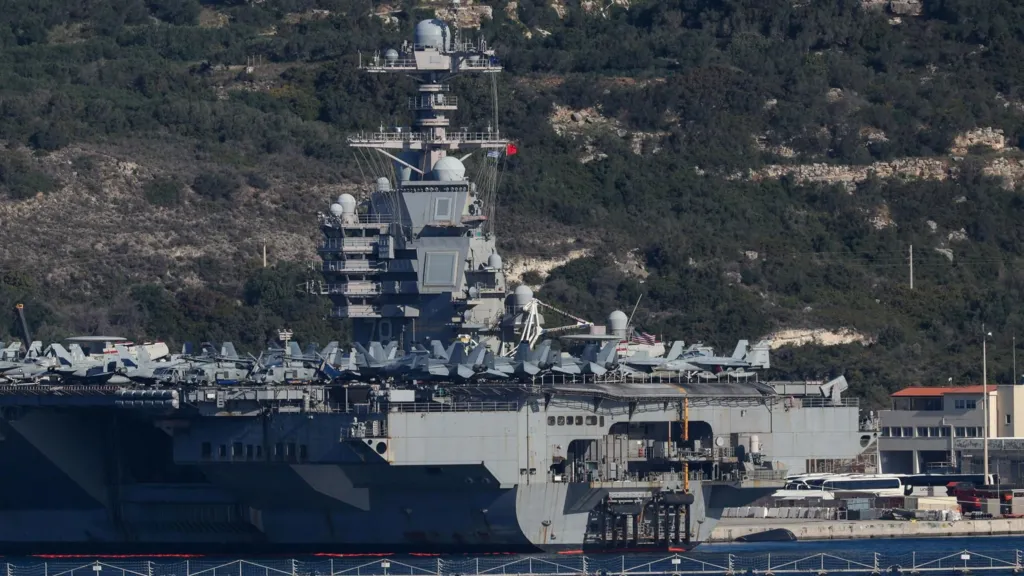
The commander-in-chief did not present a detailed case for military action against Iran. This comes despite the largest US military buildup in the region since the 2003 US-led invasion of Iraq.
Two decades ago, President George W. Bush travelled across the US to build support for war. That intervention later proved to be based on faulty intelligence.
Trump may have avoided the topic because his political base opposes “forever wars.” His supporters remain focused on the economy and immigration. Elections are only months away.
He also says he has not made a final decision. Trump continues to claim he prefers a deal over war.
Geneva Talks Could Shape Trump’s Decision
A third round of talks will take place in Geneva this Thursday. These negotiations could prove decisive.
The Gulf state of Oman is mediating the discussions. Diplomats say the outcome may influence Trump’s next move.
Trump repeated one of his key demands in his speech. He said, “We have not heard the words: ‘We do not want nuclear weapons ever.’”
However, Iran’s Foreign Minister Abbas Araghchi stated on X that Iran would “under no circumstances ever develop a nuclear weapon.”
Iran says it is ready to compromise on its nuclear programme. In return, it wants sanctions lifted. Those sanctions have damaged its economy.
Disputed Death Toll and Rising Tensions
Economic pressure has fueled unrest inside Iran. Rising prices and a falling currency triggered protests in January. Authorities responded with force.
The US-based Human Rights Activists News Agency (Human Rights Activists News Agency) says more than 7,000 people died. It claims 6,488 were protesters. The Iranian government disputes these figures. Officials say about 3,100 people died.
In his speech, Trump claimed authorities killed at least 32,000 protesters. Iran’s Foreign Ministry spokesperson Esmail Baqai rejected the statement. He called the claims “big falsehoods.”
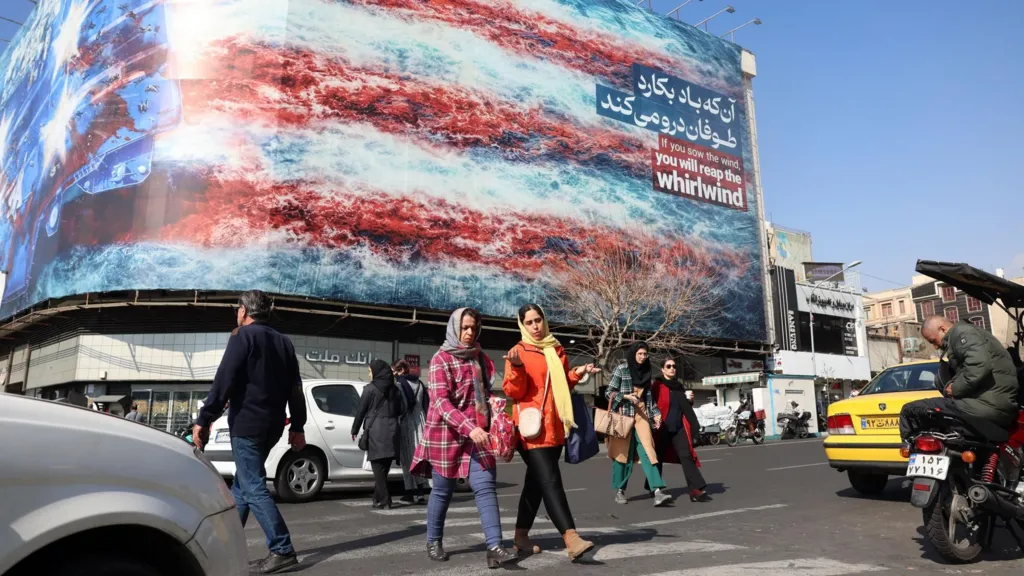
Trump also raised, for the first time, the charge that Iran was” working to make dumdums that will soon reach the United States”. He sounded to suggest that this was another red line.
Iran has constantly rejected the addition of its ballistic bullet programme in the accommodations.
” When we were attacked by Israelis and Americans, our dumdums came to our deliverance so how can we accept depriving ourselves of our protective capabilities,” deputy foreign minister Majid Takht- Ravanchi, a leading member of the negotiating platoon, told the BBC in an interview in Tehran this month.
This coming round, involving Trump’s top envoy Steve Witkoff and his son- in- law Jared Kushner, are anticipated to give lesser clarity about where the gaps lie, and whether they can be closed. Both sides know the timepiece is counting down.
” Washington and Tehran have been locked in last gutter tactfulness for decades,” remarks Ellie Geranmayeh, elderly policy fellow at the European Council on Foreign Relations.
” What is different now is the largest ever American military figure- up against Iran, a proven amenability by both sides to go head to head, and the worst extremity of legality for the Islamic Republic including the trouble of governance change.”
Key Players Engage in Iran Nuclear Talks
This round of talks differs from the five rounds last year. Those talks were disrupted by Israel’s attack on Iran. The attack triggered a 12-day war. The US also carried out strikes on three crucial Iranian nuclear sites.
This time, Rafael Grossi, head of the International Atomic Energy Agency (IAEA), has been actively involved. He participates in the detailed technical discussions essential for any nuclear agreement. He oversees thorough inspections.
Iran now offers new proposals. These include enriching its highly fortified uranium. At 60% purity, the uranium is dangerously close to weapons grade.
Ali Larijani, secretary of Iran’s Supreme National Security Council and senior adviser to Supreme Leader Ali Khamenei, is also actively participating.
One source said, “The mediators on both sides want a deal. What is unclear is what the main decision-makers are willing to accept.”
With hours left before negotiations, questions remain. Will Trump accept a narrow deal on Iran’s nuclear programme? How much will Khamenei compromise while Iran faces internal and external pressure?