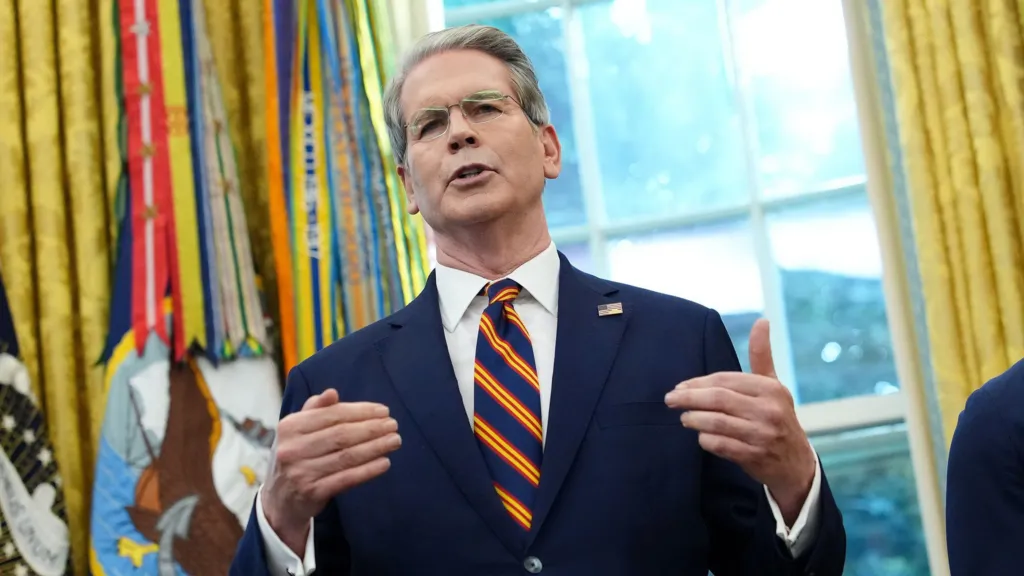
US Treasury Secretary Scott Bessent said the United States will likely impose a 15% global tariff this week. His statement followed mixed signals from President Donald Trump about the exact rate.
The administration plans to replace the broad import taxes Trump introduced last year. The Supreme Court recently struck down those tariffs.
After the ruling, the White House imposed a 10% levy. However, Trump said on social media that the rate would be 15%.
The conflicting statements created global confusion. Businesses and world leaders demanded clear guidance on US trade policy.
White House Defends Tariff Strategy Amid Legal Uncertainty
White House officials said they are preparing paperwork to match the duties with Trump’s public statements.
They downplayed the court ruling. They said the administration can use other legal tools to restore the tariffs. Officials argue the policy will rebalance trade, strengthen US manufacturing, and reduce national debt.
To impose the 10% tariff, the White House used Section 122. This trade authority allows the president to set tariffs of up to 15% for 150 days without Congress in specific conditions.
Officials also said they will use additional legal measures to restore the tariff system permanently.
Treasury Secretary Scott Bessent told CNBC he believes tariff rates will return to previous levels within five months.
Uncertainty still surrounds future US import tax policies.
Last April, Trump announced “Liberation Day” tariffs on dozens of countries. Rates started at 10% and reached as high as 50% in some cases.
The announcement triggered intense trade talks. Countries sought lower rates by offering investment pledges and policy changes.
The Supreme Court struck down the “Liberation Day” tariffs. The ruling also canceled earlier tariffs on goods from Mexico, Canada, and China that relied on emergency powers.
Trump responded by announcing a 10% global tariff. The next day, he said on social media he would raise it to 15%. However, the tariff took effect at 10%.
The flat 10% tariff applied to most countries, with some exemptions. It placed all shipments on equal terms.
The move raised concerns about existing trade deals. Some allies, including the UK, had secured special terms after “Liberation Day.” The new policy removed that advantage.